
By: Mehdia Takbir
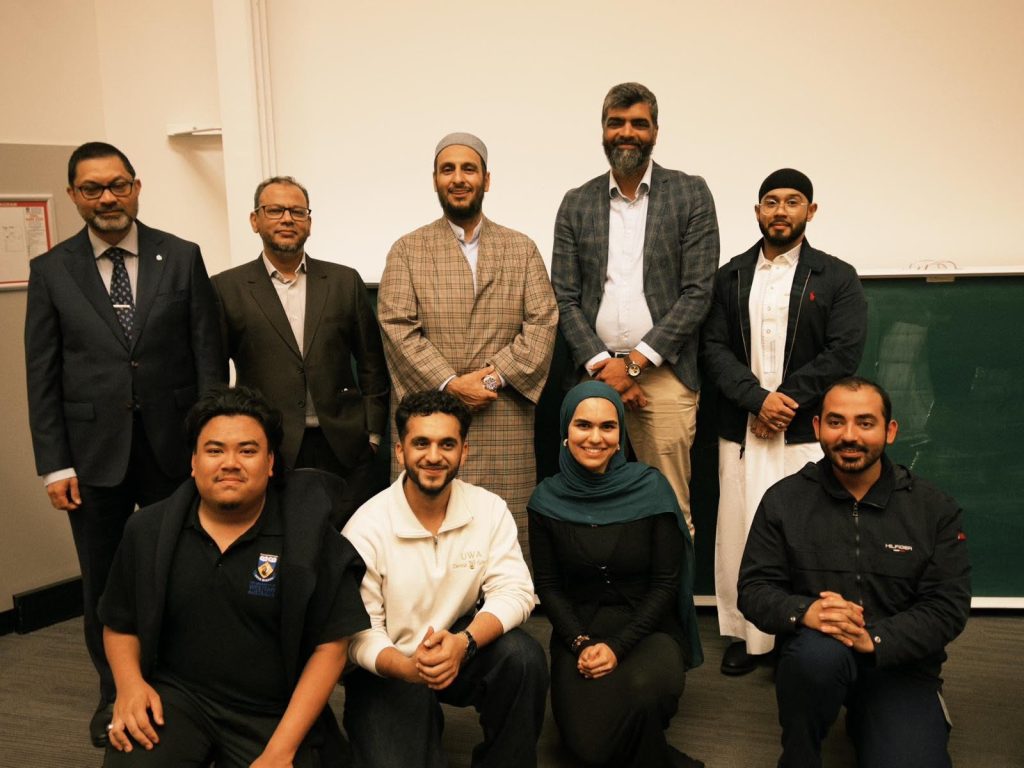
On Wednesday 13th May, the AIMA WA Student Wing, in collaboration with UWA MSA, hosted “Science of the Soul: Exploring Islamic Psychology” at UWA, bringing together over 200 attendees for an evening exploring psychology, spirituality, and the human experience.
The discipline of psychology takes its name from the Ancient Greek psyche (soul) and logia (study): “the science of the soul.” Yet as Karl Jaspers observed, modern psychiatry risks becoming a “psychiatry without psyche” – increasingly articulate in diagnosis, but less able to understand the human being as a whole.
This tension between symptom and self formed the intellectual heartbeat of the evening, centred on a single question: how do we truly understand a person in need?
What unfolded was not a niche conversation on faith and mental health, but an encounter with a tradition long engaged with what it means to be human.
Mapping the Terrain
The evening opened with a Qur’an recitation:
“Then He proportioned him and breathed into him from His rūḥ, and He made for you hearing, sight and hearts — little are you grateful.” (Surah As-Sajdah 32:9)
This invited reflection on the anatomy embedded within the verse: the proportioned body, the spirit breathed into it, and the emergence of perception through fu’ad (heart/intellect) – overall presenting mind, body, and soul as an integrated whole which framed the night’s arc.
The Social Landscape of Mental Health
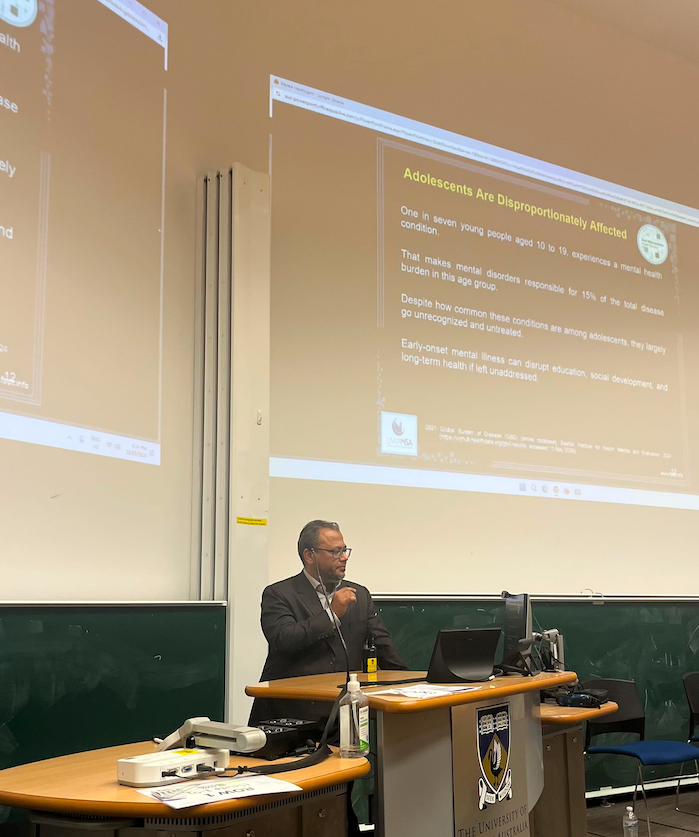
The exploration began with Dr Sajid Mahmoud, a consultant physiatrist with international experience. In ‘From Data to Diagnosis: The Epidemiology of Mental Illness’, he situated mental health within a global, population-level frame, highlighting the rising burden of mental illness worldwide, and the catalysing effects of the COVID-19 pandemic on psychological distress at scale.
His talk reframed the central question in systemic terms: not only whether mental health care is needed, but whether existing models are adequate for the full complexity of human suffering.
The Inner Architecture of the Self
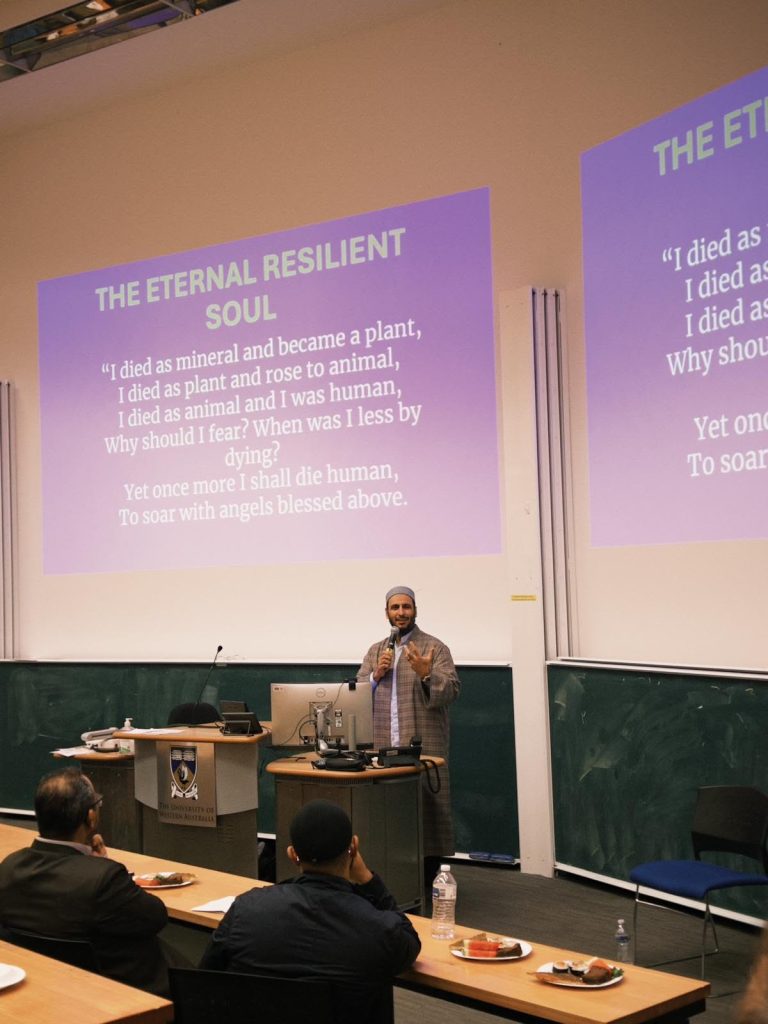
The evening then turned inward. In ‘Islam, Iman & Ihsan: An Islamic Taxonomy of Being,’ Shaykh Yahya Ibrahim, an imam and chaplain, presented a layered understanding of the self drawn from the Islamic tradition. Islam as outward action and embodiment (badan), Iman as belief and cognition (aql), and Ihsan as rooted in the heart (qalb). Within this framework, the heart is not merely a biological organ but a metaphysical centre of self that oscillates between nafs and ruh – a calibration that requires tazkiyah or self-refinement.
He also addressed a misconception in some communities that seeking psychological care is religiously discouraged. Within the Islamic ethical tradition, care for the self is expansive: encompassing spiritual practice, psychotherapy, and medication – each appropriate according to need. These are not competing approaches, but complementary forms of care directed toward holistic wellbeing.
Identity & the Therapeutic Encounter
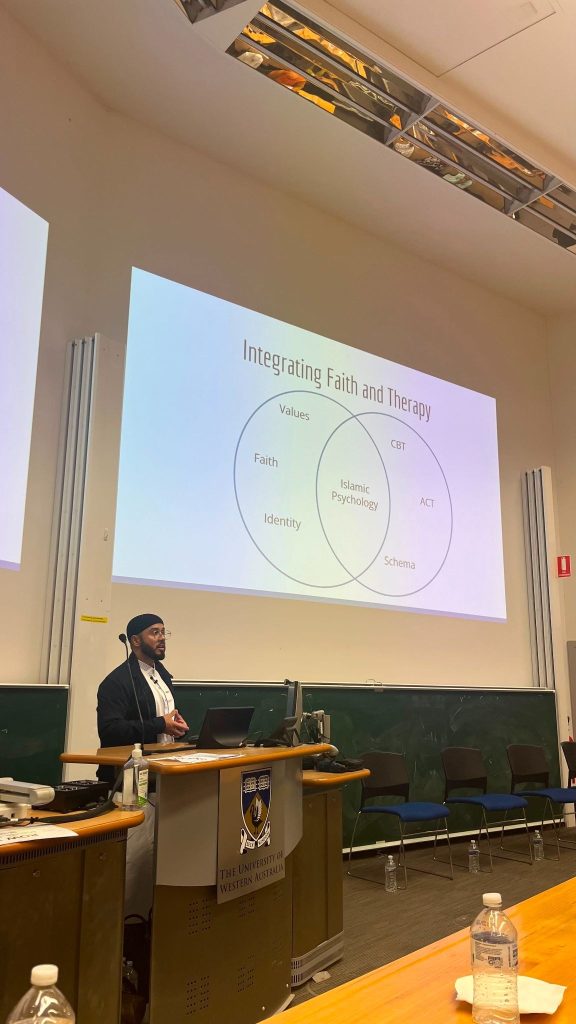
Br Mirza Bakthier, Director of Hadi Psychology, spoke on ‘Bridging the Gap: Faith & Psychology in Muslim Mental Health Care,’ addressing three interrelated challenges: identity and belonging, mental health stigma, and gaps in culturally informed care.
He reflected on the experience of acculturation among first-generation Australian-born Muslims navigating multiple worlds, often under pressure to form a single identity. Central to his talk was the concept of therapeutic alliance as something which strengthens through cultural literacy, shared values, and spiritual sensitivity. Approaches such as CBT and ACT, he noted, are most effective when integrated with the patient’s own framework of meaning, identity, and faith.
Meaning at the Clinical Edge
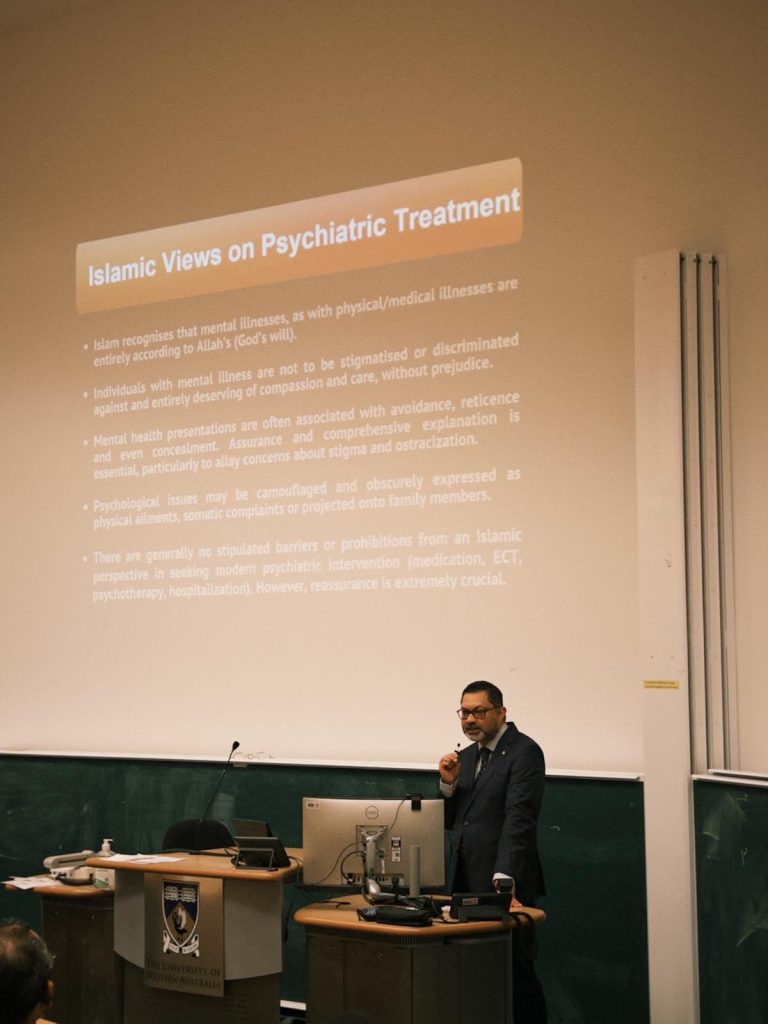
The next contribution came from Dr Ahmed Munib, Consultant Psychiatrist and Adjunct Clinical Associate Professor at UWA. In ‘Possession or Psychosis? Navigating the Diagnostic Edge,’ Dr Munib grounded his discussion in Islamic jurisprudence, highlighting the preservation of the intellect as one of the core objectives of the Shariah, and therefore psychiatric care is not only permissible but ethically supported when wellbeing is compromised.
Using real case studies, including presentations of psychosis where patients articulated their experiences as “jinn possession,” he illustrated the importance of clinicians holding both dimensions simultaneously: recognising lived belief systems while maintaining rigorous clinical assessment and ensuring appropriate treatment.
Reframing the Human Being
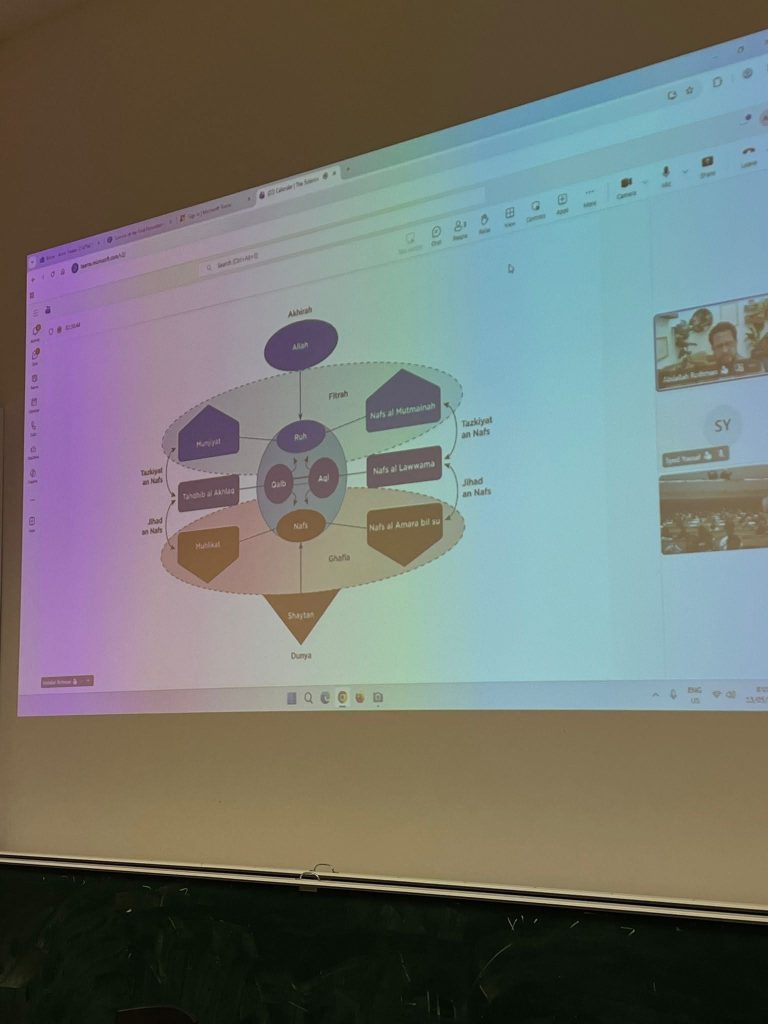
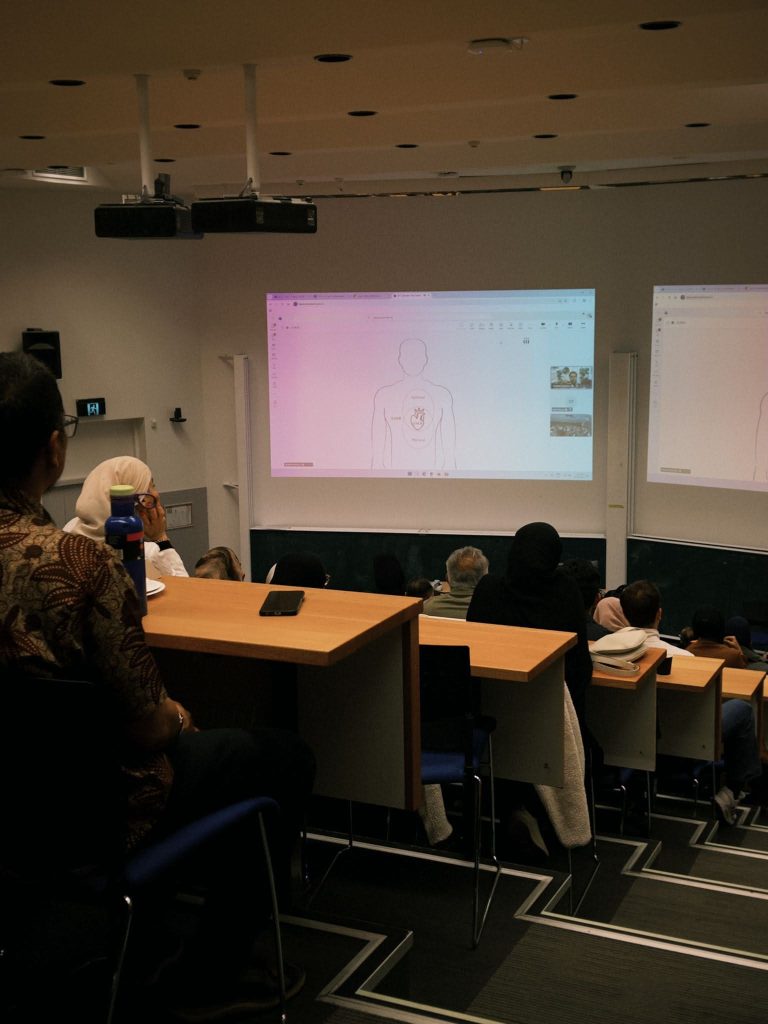
Joining in virtually, the evening’s final speaker was Dr Abdallah Rothman, founder of Dar al-Shifa, and co-president of IP, who returned to the central tension of the night – the loss of the “psyche” under dualist influence. Drawing on his thesis, he argued that Islamic psychology does not add spirituality onto existing models, but begins from a fundamentally different starting point, which is a conception of the human being where body, mind, and soul are not fragmented but held as a single reality.
Using visual models, he distinguished between surface phenomena – thoughts, emotions, and behaviours – and the deeper realities of nafs, qalb, aql, and ruh that shape them. In doing so, he echoed and extended the intellectual thread running through the evening, while drawing from the wider Islamic scholarly tradition. In this view, psychology becomes less a catalogue of symptoms and more a cartography of the unified human interior: a discipline concerned not only with what is observable, but with what gives rise to observation itself.
Closing Reflections
The evening concluded with a panel discussion bringing speakers together to address audience questions that pushed at the edges of the night’s themes: from diagnostic boundaries, to the role of community in mental health, to what integrated care might look like in practice.
Science of the Soul offered less a conclusion than a return – a return to the ruh breathed in, and to an understanding of the whole human being that resists reduction.
AIMA WA Student Wing extends its sincere gratitude to all speakers, volunteers, and attendees who contributed to making the evening such a meaningful and impactful gathering.